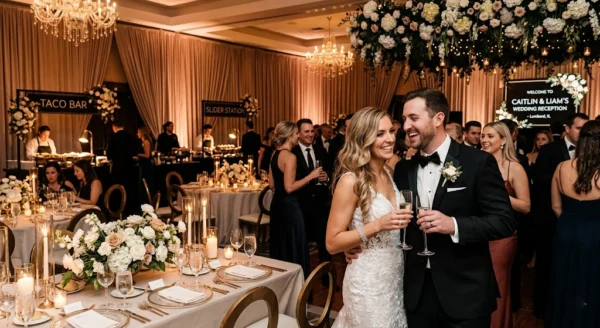
Full-service event planning in Chicago means having professional support from the first idea through the final moments of your event. Instead of hiring someone only to coordinate the event day, a full-service planner can help manage the venue, vendors, budget, design, décor, timeline, logistics, and overall guest experience.
For many hosts, that distinction matters. A beautiful event may look effortless to guests; however, behind the scenes, dozens of decisions have to work together at exactly the right time.
Whether you are planning a wedding, birthday celebration, corporate gathering, engagement, cultural wedding, or luxury private event, understanding what full-service planning actually includes can help you decide how much professional support you need.
This 2026 guide explains the process, what to expect, and what to ask before hiring an event planning company in Chicago, IL.
What Is Full-Service Event Planning?
Full-service event planning is an end-to-end approach to organizing an event. Generally, the planner becomes involved early and helps guide the project through planning, design, vendor coordination, logistics, and event-day execution.
Depending on the company and package, full-service planning may include:
- Initial event strategy and concept development
- Budget organization
- Venue research and selection assistance
- Vendor sourcing and communication
- Event design and décor planning
- Timeline and logistics management
- Guest-experience planning
- Event-day coordination
- Setup and breakdown oversight
- Contingency planning
However, every planning company defines “full service” differently. Therefore, clients should always confirm exactly what is included in their contract.
You can explore professional event planning services to better understand the types of support available through Plush Event Planning.
What Does a Full-Service Event Planner Do?
A full-service event planner helps turn an event idea into an organized experience by coordinating the creative, financial, vendor, and logistical elements. Rather than leaving the client to manage dozens of separate tasks, the planner creates a structured process and helps keep everyone working toward the same event vision.
Here is what that process can involve.
1. Event Vision and Concept Development
Every successful event should begin with a clear purpose.
Before selecting centerpieces or entertainment, a planner needs to understand what you are trying to create.
For a wedding, that may mean understanding the couple’s style, traditions, guest expectations, and priorities. Meanwhile, a corporate event may begin with objectives such as employee recognition, networking, brand awareness, or client engagement.
A planner can then translate those goals into a cohesive concept.
Consequently, decisions about venue, décor, entertainment, catering, and guest flow become easier because they are connected to one central vision.
2. Budget Planning and Prioritization
Budget management is another important part of professional event planning.
A full-service planner can help organize anticipated expenses and identify which categories deserve greater priority based on the client’s goals.
For example, one client may care most about elaborate décor and photography. Another may prioritize catering and entertainment. A corporate client, on the other hand, may invest more heavily in audiovisual production and branding.
Therefore, effective budgeting is not simply about spending less. It is about allocating resources intentionally.
For a deeper look at the budgeting process, read our Chicago event budget guide.
3. Venue Research and Selection
The venue influences almost every other part of an event.
Capacity, layout, parking, accessibility, catering policies, vendor restrictions, setup windows, sound requirements, and décor rules can all affect your plans.
As a result, full-service planners may help clients compare potential venues based on more than appearance alone.
Before signing a venue agreement, important questions can include:
- Does the space comfortably accommodate the guest count?
- How much setup and breakdown time is provided?
- Are outside vendors permitted?
- What equipment is included?
- Are there décor or entertainment restrictions?
- How will guests enter, move through, and exit the space?
- What accessibility considerations need to be addressed?
Accessibility should also be considered during planning rather than treated as a last-minute detail. The U.S. Department of Justice explains that ADA requirements apply to many businesses open to the public and provides standards concerning accessible facilities and services.
4. Vendor Sourcing and Coordination
One of the most time-consuming parts of planning an event is managing multiple vendors.
Depending on the celebration, your vendor team could include:
- Caterers
- Photographers and videographers
- Florists
- Decorators
- DJs and entertainers
- AV professionals
- Cake designers
- Rental companies
- Transportation providers
- Hair and makeup professionals
Without central coordination, every vendor may be working from different information.
A full-service planner helps create consistency. Furthermore, the planner can track important deadlines, communicate event details, and make sure vendors understand the overall timeline.
5. Event Design and Décor
Event design is one of the most visible parts of the experience, but effective design involves more than selecting attractive decorations.
A cohesive design considers the entire visual environment.
That may include:
- Color palette
- Stage and backdrop
- Centerpieces
- Tablescapes
- Linens
- Lighting
- Signage
- Welcome areas
- Sweetheart tables
- Photo opportunities
- Guest seating presentation
Most importantly, these elements should complement one another.
For example, dramatic florals may look impressive individually. However, if the lighting, linen colors, stage design, and table layout tell four different visual stories, the room can still feel disconnected.
Therefore, full-service design focuses on creating one intentional experience.
6. Timeline and Logistics Management
This is where professional planning becomes much less visible to guests but extremely valuable to hosts.
A detailed event timeline may coordinate:
- Venue access
- Vendor arrivals
- Décor installation
- Photography
- Guest arrival
- Ceremony timing
- Food service
- Speeches
- Entertainment
- Special moments
- Dessert or cake service
- Vendor breakdown
Moreover, these activities are interconnected.
If décor installation runs late, photography may be affected. If speeches take longer than expected, dinner service may need adjustment. Likewise, entertainment timing may depend on when catering concludes.
A planner’s job is to understand those dependencies before they become problems.
7. Guest Experience Planning
Beautiful décor gets photographed. However, guests often remember how an event made them feel.
That is why guest experience has become an important part of modern event planning.
A planner may consider:
- Arrival experience
- Check-in or welcome process
- Seating comfort
- Movement between event areas
- Wait times
- Food-service flow
- Entertainment pacing
- Accessibility
- Departure experience
For public-facing events, accessibility can also involve physical access and effective communication. Federal ADA guidance addresses accessibility for public accommodations and, in applicable ticketed settings, accessible seating and ticketing considerations. :contentReference[oaicite:0]{index=0}
8. Wedding Planning and Coordination
Full-service planning can be particularly valuable for weddings because couples are managing both an important personal milestone and a complex event.
A wedding planner Chicago couples hire for full service may help coordinate everything from the venue and vendor team to design, timeline, ceremony details, reception flow, and wedding-day execution.
For couples comparing wedding planners in Chicago, it is important to ask whether the package includes both planning and event-day coordination.
If you only need help closer to the wedding date, learn more about working with a day-of wedding coordinator in Chicago.
9. Pakistani, Indian and Muslim Wedding Planning
Cultural weddings can require an additional layer of coordination, particularly when several functions take place across multiple days or venues.
Pakistani, Indian, and Muslim celebrations may include traditions and events such as a Nikah, Mehndi, Dholki, Baraat, reception, or Valima, depending on the family.
Therefore, the planner needs to understand not only the schedule but also which traditions and family priorities are important to the couple.
Plush Event Planning also works with multicultural celebrations. Learn more in our Pakistani, Indian and Muslim wedding planning guide.
10. Corporate Event Planning
Full-service planning is not limited to weddings.
A Chicago corporate event planner may coordinate executive dinners, company celebrations, networking events, employee gatherings, launches, and other business functions.
In these situations, the event must often support a specific business objective while still delivering a polished guest experience.
Branding, audiovisual requirements, presentation timing, food service, seating arrangements, and executive schedules may all need to work together.
Additionally, some Chicago events or venues may involve specific licensing or regulatory considerations depending on the event format and activities. The City of Chicago maintains resources for business and special-event licensing, so requirements should be checked for the specific event rather than assumed. :contentReference[oaicite:1]{index=1}
11. Event-Day Management
After weeks or months of preparation, someone still needs to execute the plan.
On the event day, a full-service planning team may oversee:
- Vendor arrivals
- Setup progress
- Décor placement
- Timeline execution
- Guest transitions
- Vendor communication
- Last-minute adjustments
- Breakdown coordination
Meanwhile, the host should be able to focus on guests rather than answering logistical questions throughout the event.
Full-Service Event Planner vs Day-of Coordinator: What’s the Difference?
| Service | Full-Service Planner | Day-of Coordinator |
|---|---|---|
| Early planning | Typically included | Usually limited |
| Budget guidance | Often included | Usually not the primary role |
| Vendor sourcing | Often included | Usually limited |
| Event design | May be included | Usually not included |
| Timeline | Developed throughout planning | Usually finalized closer to event |
| Event-day execution | Included in many packages | Primary focus |
Because packages vary by company, always verify the exact scope before signing an agreement.
Who Should Consider Full-Service Event Planning?
Full-service planning can be particularly useful when:
- You have limited time to manage vendors yourself.
- Your event has many moving parts.
- You are planning a large wedding or celebration.
- You need both planning and event design.
- Your celebration includes multiple cultural functions.
- You are organizing a corporate event with business objectives.
- You want one central point of coordination.
- You would rather participate in the event than manage it.
What Should You Ask an Event Planning Company Before Hiring?
Before choosing an event planning company in Chicago, IL, ask these questions:
- What exactly does your full-service package include?
- Who will be my primary planner?
- Do you provide event design and décor?
- How do you manage vendor communication?
- How do you approach budgeting?
- Will your team be present during the event?
- How many staff members will be onsite?
- What happens if the timeline changes?
- Do you have experience with my type of event?
- What services are not included?
These questions make it easier to compare companies based on actual scope rather than package names alone.
Why Choose Plush Event Planning?
If you are searching for professional event planners for hire in Chicago, Plush Event Planning provides planning and design support for weddings, corporate gatherings, birthdays, private celebrations, and multicultural events throughout the Chicago area.
Our approach brings the creative and logistical sides of an event together. Instead of thinking about décor, vendors, timelines, and guest experience as unrelated tasks, we build them around one cohesive vision.
For clients, that means fewer disconnected decisions and a clearer planning process.
Whether you need wedding planning, event coordination, décor and design, or broader event support, the first step is understanding your priorities and determining the appropriate level of service.
Frequently Asked Questions About Full-Service Event Planning
What does full-service event planning include?
Full-service event planning can include concept development, budgeting, venue assistance, vendor sourcing, event design, décor coordination, timelines, logistics, guest-experience planning, and event-day management. Exact inclusions vary by planner.
What does an event planner actually do?
An event planner organizes the different elements required to create and execute an event, including vendors, schedules, budgets, logistics, design decisions, and event-day coordination depending on the selected service.
Is full-service event planning worth it?
It can be valuable for clients who have limited planning time, complex events, multiple vendors, detailed design requirements, or who want professional support throughout the process rather than only on the event day.
Does full-service event planning include décor?
Not automatically. Some companies offer planning and décor together, while others coordinate with separate designers. Always ask whether design, décor, rentals, setup, and breakdown are included.
What is the difference between an event planner and an event management company?
The terms often overlap. Event planning commonly emphasizes strategy, vendors, design, and client experience, while event management may emphasize operations and execution. However, many full-service companies handle both.
Does a full-service wedding planner attend the wedding?
Many full-service packages include wedding-day coordination, although the scope and number of onsite team members vary. Confirm this before booking.
Can an event planner organize both weddings and corporate events?
Yes. Some planners work across weddings, private celebrations, and corporate events. However, clients should look for relevant experience with their particular event type.
How do I choose an event planning company in Chicago?
Compare relevant experience, services, portfolio, communication, reviews, vendor process, design capabilities, event-day support, and the exact scope included in the contract.
Final Thoughts
Full-service event planning in Chicago is ultimately about more than creating a beautiful room. It is about connecting the vision, budget, vendors, design, timeline, logistics, and guest experience so they function as one event.
Moreover, the right level of professional support can allow you to spend less time managing individual details and more time experiencing the occasion itself.
If you are looking for an event planning company in Chicago, IL that can support both the creative and logistical sides of your celebration, explore Plush Event Planning and discuss the level of planning support your event requires.